What you control
Blocks approach a six-sided center. Left and right arrows rotate the hexagon; A and D are alternative keys in this edition. Rotation changes which part of the existing stack receives the incoming block.
Connected groups of at least three blocks of the same color can clear. Matches can involve neighboring sides, so the stack is not six unrelated columns. Letting the stack grow beyond the outer boundary ends the run.
Choose a landing place
- Identify the color and direction of the next approaching block.
- Look for a matching group it can extend.
- Check the height of the destination. A useful color match is less attractive if it leaves a tall stack in immediate danger.
- Rotate toward that choice, then watch the next incoming block instead of continuing to spin.
You will sometimes need to accept an imperfect placement. A short, manageable stack is easier to repair than a tall stack built around a distant future match.
Look around the corners
Check where same-colored blocks touch across neighboring sides. A connection around a corner can be easy to overlook when you focus on only the side facing an incoming block.
Before adding a different color on top of a small group, consider whether another landing side keeps that group available. Do not insist on preserving every pair; a nearly full side may need attention first.
Handle a crowded board
When several sides are high, shorten your plan. First find a placement that survives the next block. Then look for a clear that lowers the tallest area. Trying to engineer a large chain while ignoring an immediate collision can end the run before the plan pays off.
Avoid repeatedly reversing rotation out of panic. Identify one destination and make the smallest sequence of turns needed to reach it. The aim is deliberate placement, not maximum rotation speed.
Practice one decision at a time
Use a few runs to focus only on recognizing colors and choosing a side. On later runs, add the habit of checking neighboring sides for matches. Compare why you lost: an ignored tall stack, a missed connection, or a turn in the wrong direction.
Click inside the player before using keyboard controls. If the page scrolls instead of the hexagon turning, give the game focus again. Fullscreen can make the outer boundary easier to see.
A recorded play session: what happened
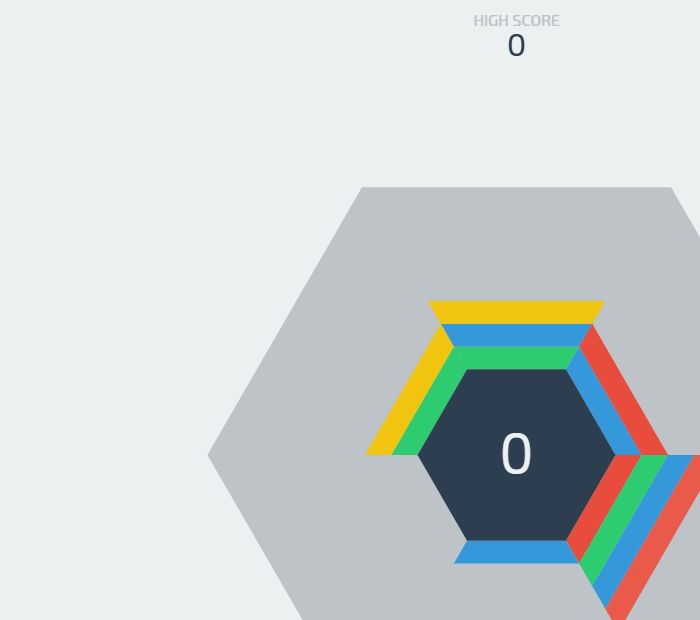
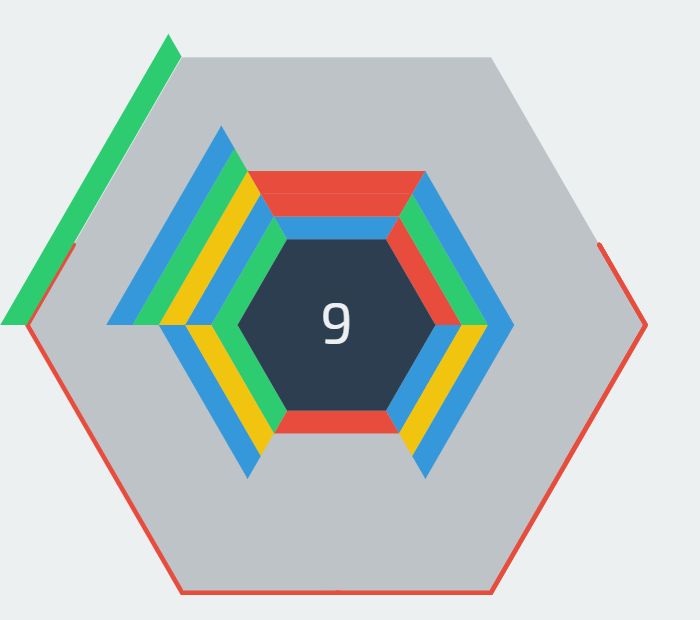
Rotating redistributed the stack, and a later color clear raised the score from 0 to 9. Rotation alone did not remove the crowded layers.
The first capture shows several mixed-color layers concentrated on the lower-right side. Turning the hexagon moved those layers to a different side; it did not reduce their height. This matters when an approaching block is about to land on a crowded side.
A later capture shows the score at 9 after a clear. The remaining stack still contains mixed colors. The useful lesson is to separate two decisions: choose where the next block will land, then check whether the resulting contact can actually clear a group.
Try it: identify the tallest stack before rotating. Follow that same stack around the hexagon so a change of position does not make you overlook its height. The corner pause control can stop a run while you inspect the board; resume when ready.
Try the next run
Use one idea from this guide in the Hextris player. Its game page includes controls and edition/source details.